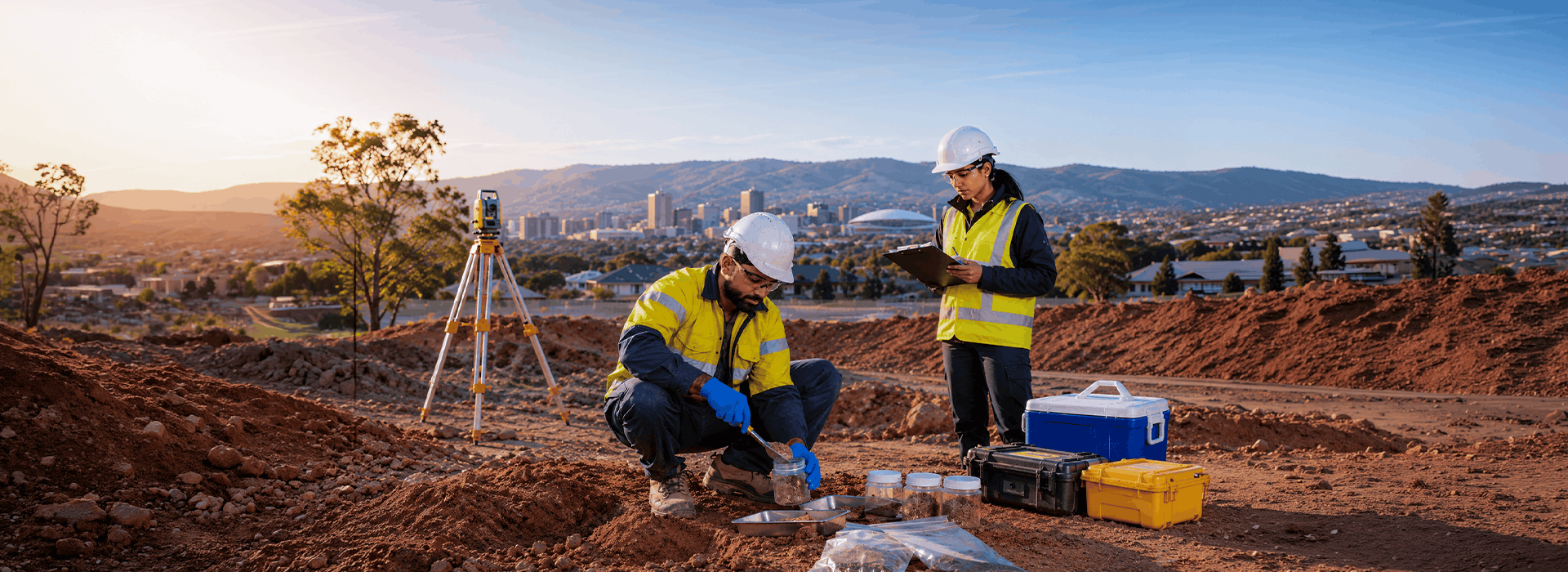
Environmental consultant collecting soil samples for a soil validation assessment in Adelaide
Adelaide & South Australia

Soil Validation Assessments


Validation of Remediation Works for Contaminated Land & Development Projects in Adelaide

After contaminated soil has been remediated, the project needs evidence that the required remediation outcome has been achieved. Our soil validation assessments provide that evidence through targeted inspection, sampling, testing, and assessment against defined criteria. We review completed remediation works and available environmental information to assess whether the site meets the relevant remediation objectives and requirements for its proposed use.

  • 50+ Years Combined Experience
  • ISO Certified Management Systems
  • Engineers Australia Members
  • Australian Geomechanics Society Affiliates
  • Testing by NATA-Accredited Laboratories
Soil Validation Assessments

What is a Soil Validation Assessment?

Confirming Whether Remediation Has Achieved Its Required Outcome

A soil validation assessment is undertaken after remediation to determine whether the completed works have addressed the contamination identified and achieved the objectives established for the site.

The assessment draws on the remediation strategy, previous environmental investigations, site observations, sampling results, laboratory analysis, and other relevant project information.

BHM Geotechnical’s validation assessments may address:

Areas where remediation has been completed
Validation sampling locations and soil conditions
Laboratory testing of collected soil samples
Comparison of results against defined validation criteria
Documentation of remediation activities and site observations
Residual contamination and any relevant management requirements
Preparation of a site validation report

The validation outcome depends on the remediation objectives and the project requirements. A validation assessment does not automatically mean that all contamination has been removed. Where residual contamination remains, the assessment may identify controls or further management measures required for the intended use.

Soil Validation & Remediation Clearance

Assessing Remediated Areas Through Sampling, Testing & Review

Validation is the stage where the completed remediation works are checked against the requirements established for the site. BHM Geotechnical combines field assessment with laboratory testing and review of the available remediation information to establish the condition of the remediated areas.

01

Review of Remediation Requirements

The validation assessment starts with understanding what the remediation was intended to achieve and the criteria against which the outcome will be assessed.

This may involve reviewing

This provides the basis for determining where validation is required and what evidence needs to be collected.

02

Soil Sampling & Laboratory Testing

Field sampling assesses remediated areas and determines whether soil conditions meet the relevant validation criteria.

Depending on the project, this may include

  • Collection of soil validation samples
  • Sampling of remediated areas and relevant boundaries
  • Laboratory analysis for identified contaminants
  • Assessment of sample locations and site conditions
  • Comparison of analytical results against the applicable criteria

The sampling and testing requirements depend on the contamination, remediation approach, site conditions, and validation objectives established for the project.

03

Validation Reporting & Site Management

The assessment findings are documented in a site validation report that records the work undertaken and the evidence supporting the validation outcome.

The report may address

  • Areas investigated and remediation activities reviewed
  • Sampling methodology and locations
  • Laboratory results
  • Assessment against validation criteria
  • Areas requiring further remediation or management
  • Residual contamination where identified
  • Recommendations for additional action or site management

Where required, the validation information may also form part of a broader regulatory process, such as an independent site contamination audit. A validation report and a site contamination audit are separate deliverables with different roles.

Get Your Site Assessed

Speak With Adelaide's Soil Validation Specialists

If remediation has been completed on a contaminated site, BHM Geotechnical can assess the available remediation information and undertake the validation work required to demonstrate whether the defined remediation objectives have been achieved across Adelaide and South Australia.

    Why Choose BHM Geotechnical?

    Practical Validation Advice for Adelaide Development Projects

    50+ Years Combined Experience

    Validation needs to establish a defensible connection between the remediation work completed and the outcome required for the site. BHM Geotechnical combines environmental assessment experience with field investigation and laboratory testing to clearly document that outcome.

    Remediation-Led Validation

    We assess completed remediation against the project's objectives and requirements, rather than treating validation as a standalone soil testing exercise.

    Targeted Soil Assessment

    Sampling and testing are planned around identified contamination, remediated areas, site conditions, and applicable validation criteria.

    Evidence-Based Reporting

    Site observations, sampling results, laboratory data, and remediation information are brought together to document the validation outcome.

    Clear Identification of Residual Risks

    Where contamination remains or validation criteria have not been met, the findings can identify areas requiring further remediation or management.

    Practical Development Support

    Validation findings give developers, consultants, contractors, and other project stakeholders clear information about the condition of the remediated areas and the next steps required.

    Soil Validation Assessments for Remediated & Contaminated Sites

    Where Validation of Remediation Works Is Required

    The scope of soil validation depends on the contamination history, remediation approach, proposed land use, and project requirements.

    01

    Completed Soil Remediation

    Assess areas where contaminated soil has been excavated, treated, contained, or otherwise remediated against the defined remediation objectives.

    02

    Sites Following a Remedial Action Plan

    Undertake validation after remediation works have been completed in accordance with an approved or agreed remediation strategy.

    03

    Excavated & Reinstated Areas

    Check remediated areas following excavation and soil replacement where validation criteria have been established for the site.

    04

    Former Potentially Contaminating Land Uses

    Support redevelopment of sites with a history of industrial, commercial, service, or other potentially contaminating activities where remediation has been undertaken.

    05

    Sites With Residual Contamination

    Assess remediation outcomes where some contamination remains and determine whether the available evidence supports the required management approach for the proposed use.

    06

    Projects Requiring Validation Documentation

    Prepare validation information and reporting where the project requires documented evidence of remediation outcomes as part of its development or environmental pathway.

    When Is a Soil Validation Assessment Required?

    Common Situations Where Remediation Validation Is Needed

    Soil validation is generally undertaken after remediation where the project needs evidence that the defined remediation objectives have been achieved. The scope depends on the contamination identified, remediation undertaken, proposed land use, and applicable project or regulatory requirements.

    Common situations include

    • Contaminated soil has been excavated, treated, contained, or otherwise remediated
    • A Remedial Action Plan or site remediation plan specifies validation requirements
    • Remediation works need to be checked against defined acceptance criteria
    • Soil has been removed and replaced as part of a contamination response
    • A development requires documented evidence of the remediation outcome
    • Residual contamination needs to be assessed and considered against the proposed future use
    • Validation information is required to support a broader site contamination or audit process

    Planning validation requirements early helps ensure appropriate evidence is collected during and after remediation, rather than discovering gaps once the site works are complete.

    The Soil Validation Assessment Process

    From Remediation Records to a Documented Validation Outcome

    01

    Review Environmental & Remediation Information

    We review available PSI and DSI reports, the RAP or site remediation plan, remediation records, laboratory results, development information, and other relevant documentation to establish the validation requirements.

    02

    Establish Validation Criteria

    Identify the remediation objectives and applicable acceptance criteria to determine what the completed works must demonstrate.

    03

    Inspect & Sample the Remediated Areas

    Site observations and targeted soil sampling are undertaken to assess the areas where remediation has been completed. Sampling requirements are determined by the site’s contamination history and remediation strategy.

    04

    Laboratory Testing & Assessment

    An appropriate laboratory analyses collected samples, where required. The results are assessed against the defined validation criteria alongside the site observations and remediation information.

    05

    Prepare the Site Validation Report

    The findings are documented in a site validation report, including the work undertaken, analytical results, assessment against the validation criteria, and any further remediation or management recommendations where required.

    Where a separate site contamination audit or statement of site suitability is required, the validation report provides supporting evidence but does not replace those processes.

    Why Soil Validation Matters

    Providing Evidence That Remediation Has Achieved Its Intended Outcome

    Completing remediation works does not by itself demonstrate that the required environmental outcome has been achieved. Validation provides the evidence needed to assess remediated areas against the project's established criteria.

    Verify Completed Remediation

    Check whether the remediated areas meet the defined remediation objectives and validation criteria.

    Confirm Soil Conditions

    Use targeted sampling and laboratory testing to establish soil conditions after remediation.

    Document the Remediation Outcome

    Compile field observations, analytical results, and remediation information into a clear validation record.

    Identify Further Requirements

    Highlight areas where additional remediation, investigation, or management may be required.

    Support Development Decisions

    Provide project stakeholders with information about the condition of remediated areas before the next stage of development.

    Address Residual Contamination

    Where contamination remains, provide information that can support appropriate controls or ongoing site management for the intended use.

    Adelaide’s Developers, Builders, & Property Owners Trust Us

    BHM Geotechnical provides environmental investigations, remediation planning, validation support, and practical technical advice to developers, builders, consultants, and property owners across Adelaide and South Australia.

    BHM Geotechnical undertook the validation work following remediation on our site. The sampling program was well planned and the validation report clearly documented the outcome, which made the next stage of our development straightforward.
    S
    We engaged BHM Geotechnical for environmental investigation and remediation support. Their team explained the findings in a straightforward manner and was responsive to our questions throughout the project.
    M
    The validation report was well presented and gave our project team clear information about the condition of the remediated areas and what was required next.
    A
    Practical environmental advice that supported informed decisions on our redevelopment site.
    T
    The team at BHM Geotechnical was efficient from the initial site assessment through to the final report. Their recommendations were easy to understand and gave our project team useful direction.
    R
    We are writing to you to confirm that the matter has now settled. We thank you for your assistance in this matter. Your expertise was instrumental in settling the matter. We confirm that you will not be required to attend Court as earlier anticipated.
    K
    Thanks to your report, the other side made a significant further concession of around 30% from their last offer which the other side was not earlier willing to do.
    I
    Efficient, concise environmental and geotechnical advice.
    P

    Validate Your Remediation Before You Proceed

    We assess your remediated soil and document the outcome, giving your project the evidence it needs to move forward.

    Request an Assessment

    Have Questions?
    Let's Clear Them Up

    What is a soil validation assessment?

    A soil validation assessment examines completed remediation works to determine whether the remediated areas meet the objectives and validation criteria established for the project. It can involve site inspection, soil sampling, laboratory testing, and preparation of a site validation report.

    When is soil validation required?

    Soil validation is generally required where remediation has been undertaken and the project needs evidence that the defined remediation objectives have been achieved. The specific requirements depend on the contamination, remediation strategy, proposed land use, and applicable project or regulatory requirements.

    What is included in a site validation report?

    A site validation report can document the remediation areas assessed, sampling methodology and locations, laboratory results, site observations, assessment against validation criteria, and any further remediation or management requirements identified.

    Does soil validation mean the site is free of contamination?

    Not necessarily. Validation determines whether the remediation outcome meets the project's established criteria. Depending on the site and proposed use, residual contamination may remain and require appropriate controls or ongoing management.

    Is a validation report the same as a site contamination audit?

    No. A validation report documents the results of validation work following remediation. A site contamination audit is a separate process undertaken by an EPA-accredited site contamination auditor where required or engaged for the project. The auditor independently reviews the available assessment and remediation information and provides an opinion or determination within the scope of the audit.

    Does a validation assessment replace a statement of site suitability?

    Not necessarily. South Australia’s Practice Direction 14 provides for a statement of site suitability in prescribed circumstances. The statement is a separate document and should not be treated as interchangeable with a soil validation report.

    What happens if validation testing identifies contamination?

    If the validation results do not demonstrate that the defined remediation objectives have been achieved, further remediation, investigation, or management may be required. The appropriate response depends on the findings, validation criteria, proposed land use, and project requirements.

    Does BHM carry out remediation works?

    BHM Geotechnical provides environmental assessment, validation, remediation planning, and related technical advice. An appropriately appointed remediation contractor generally undertakes physical remediation works in accordance with the agreed remediation strategy.

    footer light shape